


XL-aiR: UHF Wireless XLR System for Dynamic Microphones

Checkout with total confidence.

Want to make your dynamic XLR mic wireless?
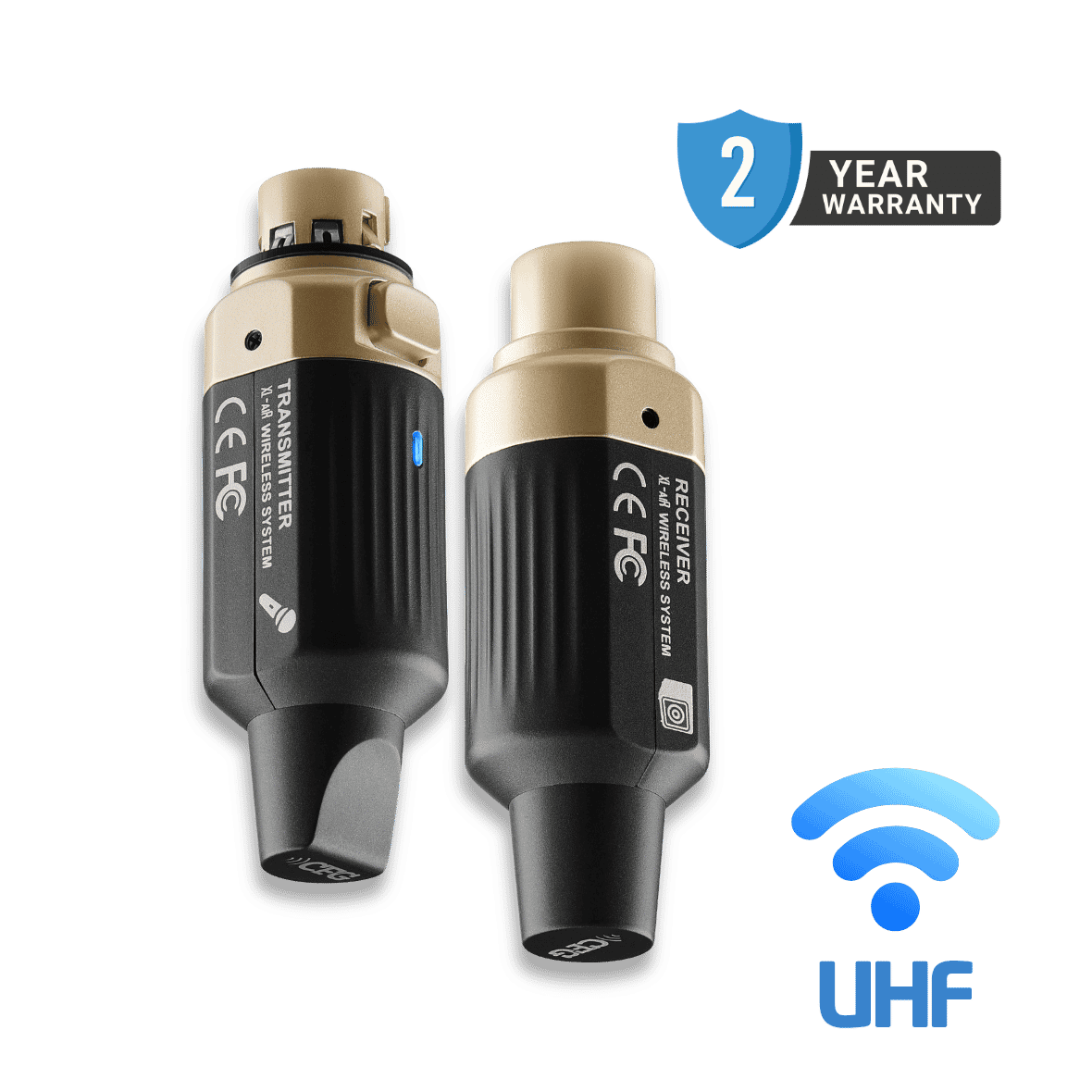
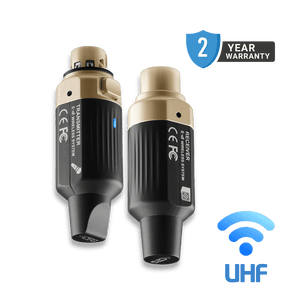
XL-aiR turns a standard XLR dynamic microphone into a rechargeable UHF wireless mic setup, without making you replace the mic you already like.
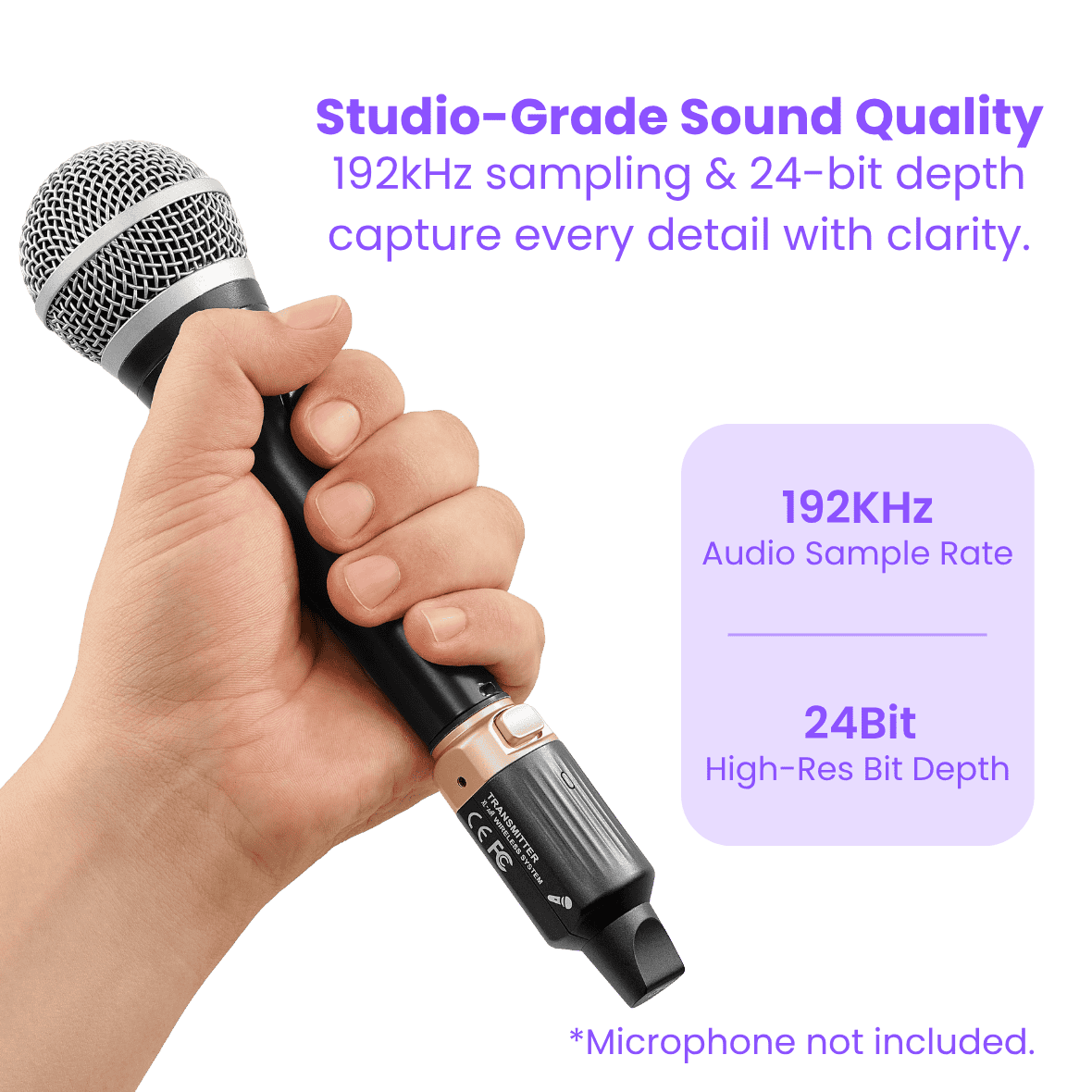
Plug the transmitter into your dynamic microphone, plug the receiver into your mixer, PA mixer, audio interface, recorder, or compatible mic-level XLR input, choose a matching channel, and you’re ready to move without dragging an XLR cable across the room.
Important: Microphone not included. XL-aiR works with standard XLR dynamic microphones only. It does not provide phantom power and is not for condenser mics, line-level outputs, speaker outputs, powered speakers, or amp outputs.

Who is XL-aiR made for?
XL-aiR is made for singers, speakers, churches, creators, mobile DJs, interview setups, and live sound users who want to make a dynamic XLR microphone wireless.
It is a strong fit when you already have a dynamic mic you like, but you want to lose the XLR cable between the microphone and your mixer, PA mixer, audio interface, recorder, or compatible mic-level XLR input.

Good uses
- Live vocals with dynamic XLR microphones
- Public speaking and presentations
- Church and worship services
- Interviews and mobile content setups
- Temporary PA systems and pop-up events
- Instrument miking with a compatible dynamic mic
Do not use it for
- Condenser microphones that need phantom power
- Line-level outputs from mixers, DI boxes, or house systems
- Speaker-level outputs
- Powered speaker outputs
- Amp outputs
- Any setup that is not mic-level XLR
Plug Into the Right XLR Input and You’re Rolling
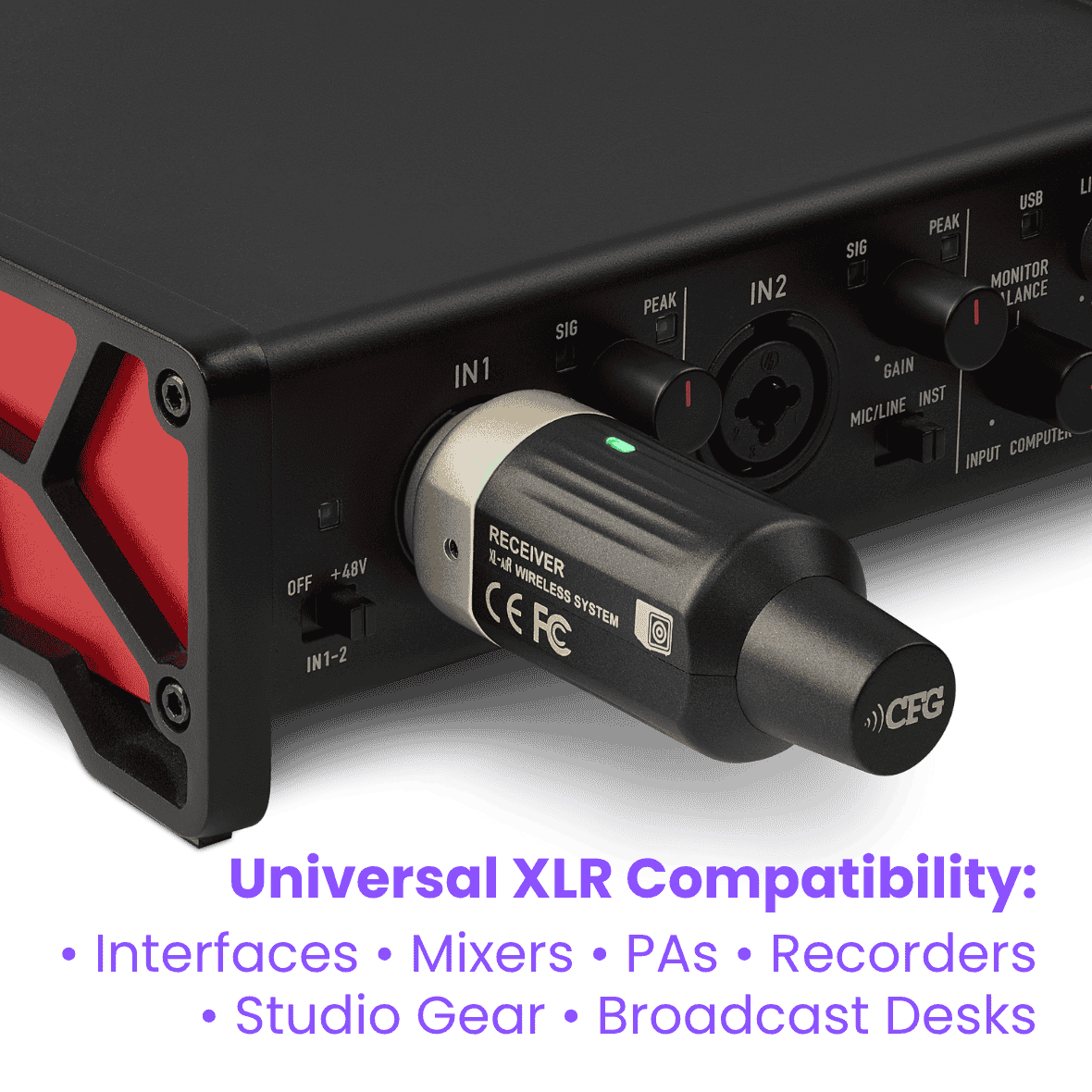
XL-aiR’s receiver connects to compatible mic-level XLR inputs on mixers, audio interfaces, recorders, PA mixers, and broadcast desks.

Why does UHF matter for wireless microphones?
XL-aiR runs on UHF, outside common Wi-Fi and Bluetooth traffic, making it a strong fit for live vocals, speaking, churches, interviews, and mobile PA setups.
In plain English: it gives your mic a cleaner wireless lane than the crowded 2.4GHz or 5.8GHz space used by a mountain of everyday devices.
UHF wireless lane
Runs outside common Wi-Fi and Bluetooth traffic, which helps in rooms packed with phones, routers, tablets, and other wireless gear.
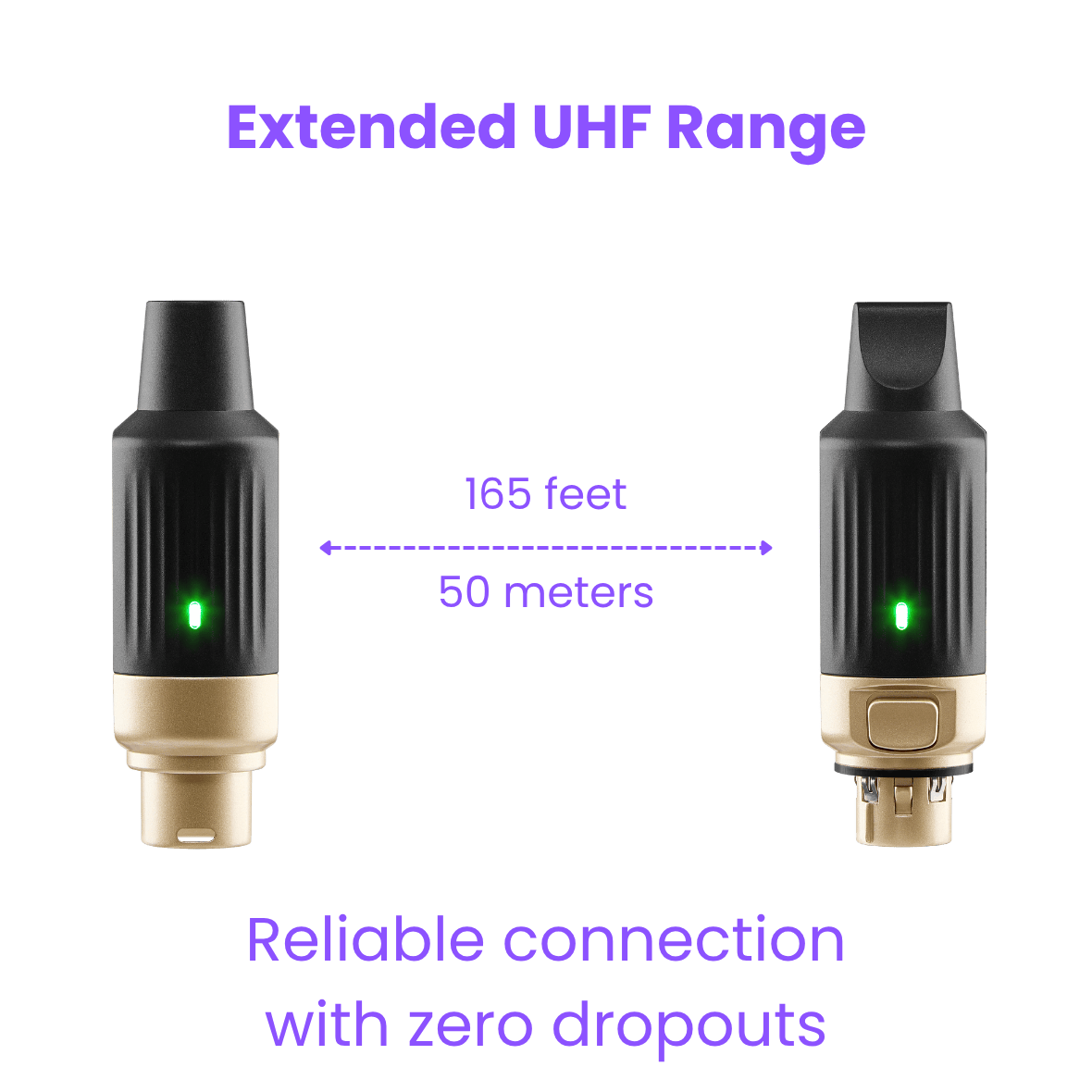
Up to 165 ft range
Built for up to 165 ft / 50 m line-of-sight range, so performers and speakers are not glued to one spot.
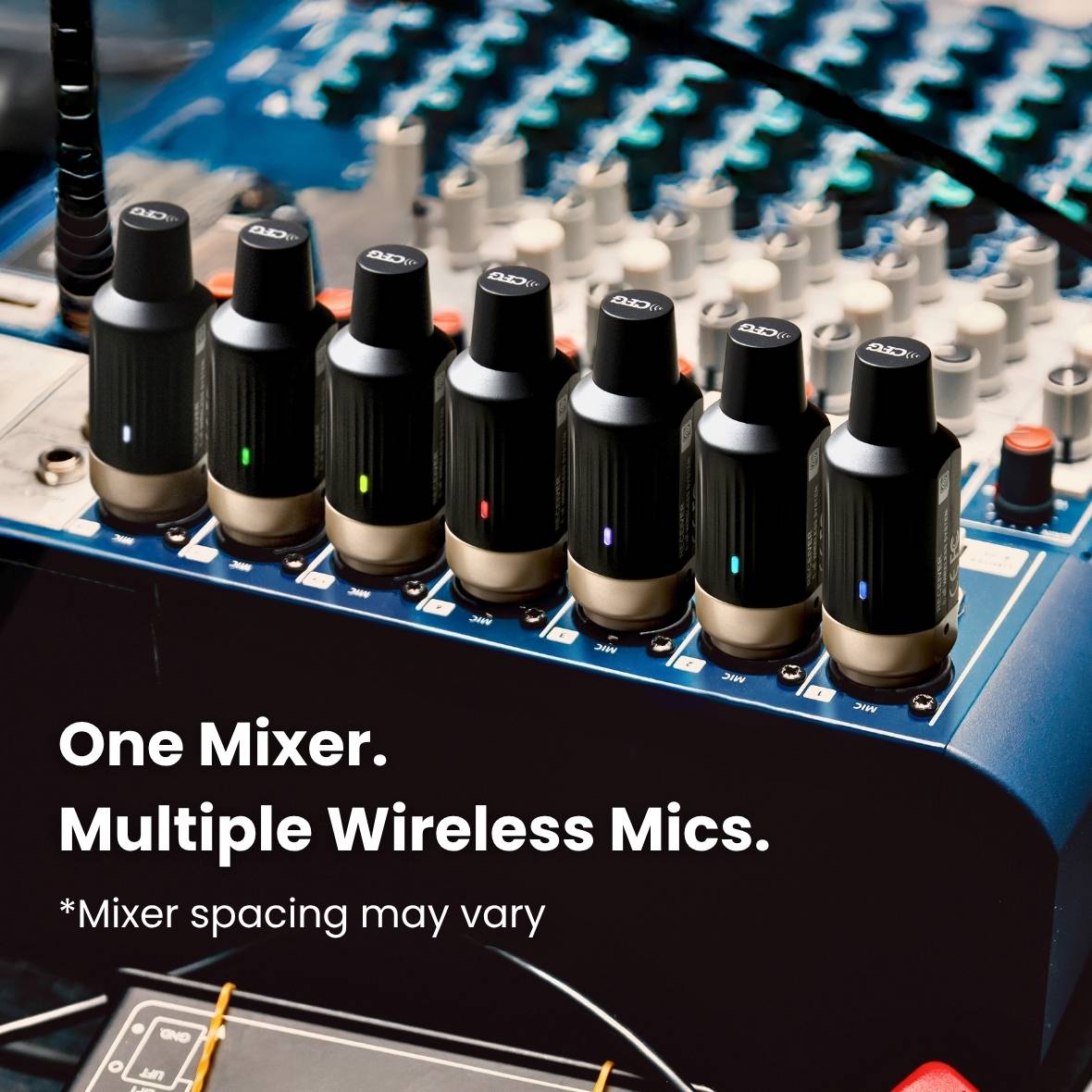
7 selectable channels
Gives you channel options for busy rooms and multi-system setups.

Same Job. Better Wireless Lane.
XL-aiR runs on UHF 657-663MHz instead of living next door to routers, phones, Bluetooth gear, and the usual 2.4GHz / 5.8GHz traffic jam.
| Feature | XL-aiR UHF | Typical 2.4GHz / 5.8GHz Wireless |
|---|---|---|
| Wireless band | UHF 657-663MHz | 2.4GHz / 5.8GHz |
| Wireless traffic | Outside common Wi-Fi and Bluetooth traffic | Often closer to Wi-Fi, Bluetooth, and common consumer wireless gear |
| Range | Up to 165 ft / 50 m line-of-sight | Often shorter, depending on the system and environment |
| Channels | 7 selectable UHF channels | Varies by system |
| Best for | Stage, worship, speaking, interviews, mobile PA, and content setups | Casual setups, depending on the system |
XL-aiR UHF
- Wireless band: UHF 657-663MHz
- Wireless traffic: outside common Wi-Fi and Bluetooth traffic
- Range: up to 165 ft / 50 m line-of-sight
- Channels: 7 selectable UHF channels
- Best for: stage, worship, speaking, interviews, mobile PA, and content setups
Typical 2.4GHz / 5.8GHz Wireless
- Wireless band: 2.4GHz / 5.8GHz
- Wireless traffic: often closer to Wi-Fi, Bluetooth, and common consumer wireless gear
- Range: often shorter, depending on the system and environment
- Channels: varies by system
- Best for: casual setups, depending on the system
Want to see and hear XL-aiR in action?
Watch the setup video to see how XL-aiR connects, then hear the sound test with the mic running through XL-aiR into an audio interface.
How to use XL-aiR
Power on, pick a matching channel, wait for a solid connection, and you’re live.
XL-aiR sound test and review
Mic to XL-aiR to interface, with no EQ and no compression, so you can hear the system clearly.
Small Plug-On System. Big Stage Manners
Studio-grade audio, UHF range, 7-channel control, and a compact XLR design that keeps your mic free without turning your setup into a science project.


XL-aiR Tech Specs
Here are the core specs for XL-aiR, including UHF frequency, range, battery, charging, audio, and safe-use limits.
Wireless & Audio
- Channels: 7 selectable UHF channels
- Frequency band: 657-663MHz
- Frequency response: 20Hz-20kHz
- Sample rate / bit depth: 192kHz / 24-bit
- SNR: >106dB
- Dynamic range: >106dB
Range & RF
- Operating range: up to 165 ft / 50 m line-of-sight
- RF output power: up to 20mW, ≤13dBm
- FCC / CE compliant
Power & Charging
- Power: 3.7V / 800mAh Li-ion battery
- Battery life: up to 6 hours
- Charging time: approx. 2 hours
- Y-split USB-C charging cable included
- Use only a 5V/5W/1A charger
I/O & Fit
- Input / output: XLR
- Designed for standard XLR-connected dynamic microphones
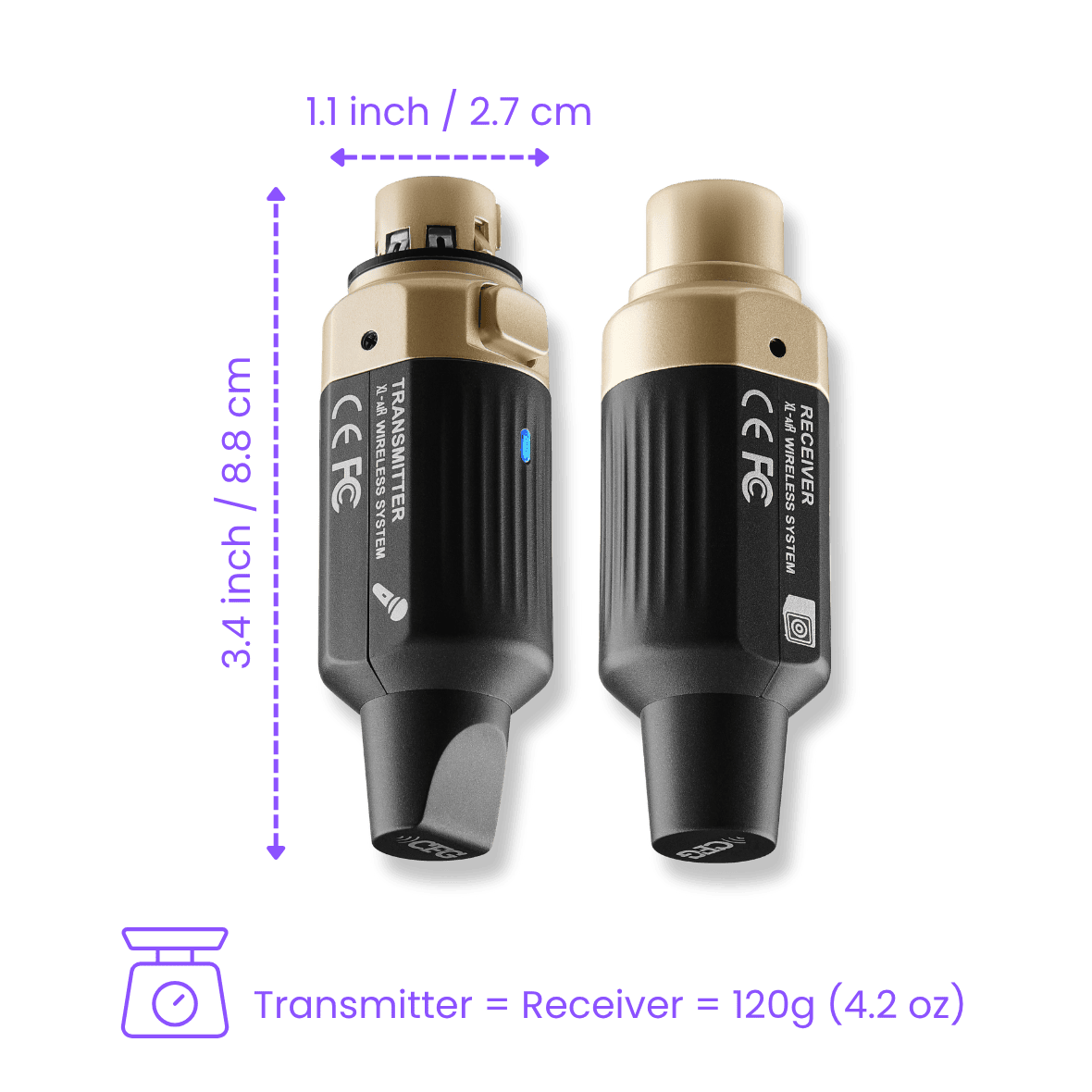
- Dimensions, each unit: 27 x 27 x 88 mm / 1.1 x 1.1 x 3.40 in
- Weight: 120g / 4.2 oz
Compatibility
- Works with standard XLR dynamic microphones
- Does not supply phantom power
- Not compatible with condenser microphones that need phantom power
- Microphone not included
Safe Use
- XL-aiR is only for microphone-level signals
- Do not use it for line-level signals from mixers, DI boxes, house systems, or powered speakers
- Do not use it as a speaker cable replacement
- Damage from misuse is not supported
What comes in the XL-aiR box?
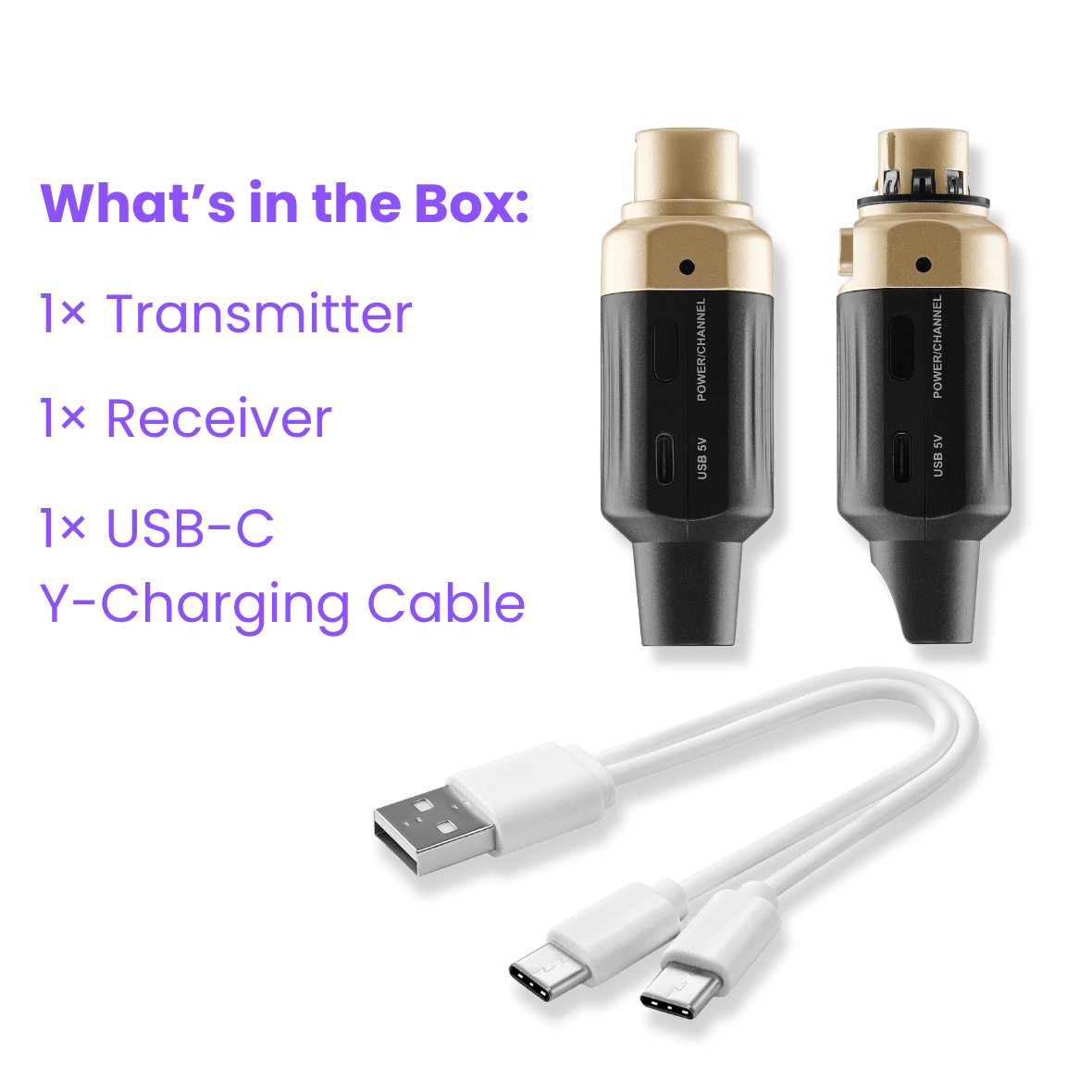
The XL-aiR system includes the wireless transmitter, wireless receiver, USB-C charging cable, and owner’s manual.
Microphone not included.
- 1 wireless microphone transmitter: plugs into your compatible XLR dynamic microphone.
- 1 wireless microphone receiver: plugs into a compatible mic-level XLR input.
- 1 Y-split USB-C charging cable: charges both units from one suitable USB charger.
- 1 owner’s manual: setup, channel selection, charging, and safe-use guidance.
⚠️ Use the right charger with XL-aiR
Use only a 5V/5W/1A charger with XL-aiR.
Higher voltage or higher wattage chargers may damage the unit and void the warranty. The included Y-split USB-C cable lets you charge the transmitter and receiver together, but the wall charger still needs to match the correct rating.
Simple rule: low-power USB charger, yes. Fast charger, power brick, turbo charger, or mystery drawer monster, no thanks.
XL-aiR FAQ
Does XL-aiR work with condenser microphones?
No. XL-aiR is made for standard XLR dynamic microphones and does not provide phantom power. Condenser microphones that need phantom power are not compatible.
Is the microphone included?
No. XL-aiR includes the wireless transmitter, wireless receiver, Y-split USB-C charging cable, and owner’s manual. The microphone is not included.
Can I use XL-aiR with a mixer or PA system?
Yes, when using the receiver into a compatible mic-level XLR input. XL-aiR is for mic-level signals only, not line-level outputs, speaker outputs, powered speaker outputs, or amp outputs.
Can I plug XL-aiR into a line output, DI box, powered speaker, or amp output?
No. Do not use XL-aiR with line-level or speaker-level signals. Misuse may damage the unit and void the warranty.
What is the wireless range?
XL-aiR has up to 165 ft / 50 m line-of-sight range. For best results, keep the transmitter and receiver with a clear path between them.
Can I use multiple XL-aiR systems at the same time?
Yes. XL-aiR has 7 selectable UHF channels, which helps when using more than one system in the same room.
Why does XL-aiR use UHF?
UHF keeps XL-aiR outside common Wi-Fi and Bluetooth traffic, which makes it a strong fit for live vocals, speaking, churches, interviews, and mobile PA setups.
How long does the battery last?
Battery life is up to 6 hours per charge. Both the transmitter and receiver are rechargeable.
How long does charging take?
Charging time is approximately 2 hours. Use only a 5V/5W/1A charger to help protect the battery and warranty.
Does XL-aiR shut off automatically?
No. XL-aiR does not auto shut off, so remember to power off both the transmitter and receiver after use.
What comes in the box?
The box includes one wireless microphone transmitter, one wireless microphone receiver, one Y-split USB-C charging cable, and one owner’s manual. Microphone not included.
Want to make your dynamic XLR mic wireless?
XL-aiR turns a standard XLR dynamic microphone into a rechargeable UHF wireless mic setup, without making you replace the mic you already like.
Plug the transmitter into your dynamic microphone, plug the receiver into your mixer, PA mixer, audio interface, recorder, or compatible mic-level XLR input, choose a matching channel, and you’re ready to move without dragging an XLR cable across the room.
Important: Microphone not included. XL-aiR works with standard XLR dynamic microphones only. It does not provide phantom power and is not for condenser mics, line-level outputs, speaker outputs, powered speakers, or amp outputs.
Who is XL-aiR made for?
XL-aiR is made for singers, speakers, churches, creators, mobile DJs, interview setups, and live sound users who want to make a dynamic XLR microphone wireless.
It is a strong fit when you already have a dynamic mic you like, but you want to lose the XLR cable between the microphone and your mixer, PA mixer, audio interface, recorder, or compatible mic-level XLR input.
Good uses
- Live vocals with dynamic XLR microphones
- Public speaking and presentations
- Church and worship services
- Interviews and mobile content setups
- Temporary PA systems and pop-up events
- Instrument miking with a compatible dynamic mic
Do not use it for
- Condenser microphones that need phantom power
- Line-level outputs from mixers, DI boxes, or house systems
- Speaker-level outputs
- Powered speaker outputs
- Amp outputs
- Any setup that is not mic-level XLR
Plug Into the Right XLR Input and You’re Rolling
XL-aiR’s receiver connects to compatible mic-level XLR inputs on mixers, audio interfaces, recorders, PA mixers, and broadcast desks.
Why does UHF matter for wireless microphones?
XL-aiR runs on UHF, outside common Wi-Fi and Bluetooth traffic, making it a strong fit for live vocals, speaking, churches, interviews, and mobile PA setups.
In plain English: it gives your mic a cleaner wireless lane than the crowded 2.4GHz or 5.8GHz space used by a mountain of everyday devices.
UHF wireless lane
Runs outside common Wi-Fi and Bluetooth traffic, which helps in rooms packed with phones, routers, tablets, and other wireless gear.
Up to 165 ft range
Built for up to 165 ft / 50 m line-of-sight range, so performers and speakers are not glued to one spot.
7 selectable channels
Gives you channel options for busy rooms and multi-system setups.
Same Job. Better Wireless Lane.
XL-aiR runs on UHF 657-663MHz instead of living next door to routers, phones, Bluetooth gear, and the usual 2.4GHz / 5.8GHz traffic jam.
| Feature | XL-aiR UHF | Typical 2.4GHz / 5.8GHz Wireless |
|---|---|---|
| Wireless band | UHF 657-663MHz | 2.4GHz / 5.8GHz |
| Wireless traffic | Outside common Wi-Fi and Bluetooth traffic | Often closer to Wi-Fi, Bluetooth, and common consumer wireless gear |
| Range | Up to 165 ft / 50 m line-of-sight | Often shorter, depending on the system and environment |
| Channels | 7 selectable UHF channels | Varies by system |
| Best for | Stage, worship, speaking, interviews, mobile PA, and content setups | Casual setups, depending on the system |
XL-aiR UHF
- Wireless band: UHF 657-663MHz
- Wireless traffic: outside common Wi-Fi and Bluetooth traffic
- Range: up to 165 ft / 50 m line-of-sight
- Channels: 7 selectable UHF channels
- Best for: stage, worship, speaking, interviews, mobile PA, and content setups
Typical 2.4GHz / 5.8GHz Wireless
- Wireless band: 2.4GHz / 5.8GHz
- Wireless traffic: often closer to Wi-Fi, Bluetooth, and common consumer wireless gear
- Range: often shorter, depending on the system and environment
- Channels: varies by system
- Best for: casual setups, depending on the system
Want to see and hear XL-aiR in action?
Watch the setup video to see how XL-aiR connects, then hear the sound test with the mic running through XL-aiR into an audio interface.
How to use XL-aiR
Power on, pick a matching channel, wait for a solid connection, and you’re live.
XL-aiR sound test and review
Mic to XL-aiR to interface, with no EQ and no compression, so you can hear the system clearly.
Small Plug-On System. Big Stage Manners
Studio-grade audio, UHF range, 7-channel control, and a compact XLR design that keeps your mic free without turning your setup into a science project.
XL-aiR Tech Specs
Here are the core specs for XL-aiR, including UHF frequency, range, battery, charging, audio, and safe-use limits.
Wireless & Audio
- Channels: 7 selectable UHF channels
- Frequency band: 657-663MHz
- Frequency response: 20Hz-20kHz
- Sample rate / bit depth: 192kHz / 24-bit
- SNR: >106dB
- Dynamic range: >106dB
Range & RF
- Operating range: up to 165 ft / 50 m line-of-sight
- RF output power: up to 20mW, ≤13dBm
- FCC / CE compliant
Power & Charging
- Power: 3.7V / 800mAh Li-ion battery
- Battery life: up to 6 hours
- Charging time: approx. 2 hours
- Y-split USB-C charging cable included
- Use only a 5V/5W/1A charger
I/O & Fit
- Input / output: XLR
- Designed for standard XLR-connected dynamic microphones
- Dimensions, each unit: 27 x 27 x 88 mm / 1.1 x 1.1 x 3.40 in
- Weight: 120g / 4.2 oz
Compatibility
- Works with standard XLR dynamic microphones
- Does not supply phantom power
- Not compatible with condenser microphones that need phantom power
- Microphone not included
Safe Use
- XL-aiR is only for microphone-level signals
- Do not use it for line-level signals from mixers, DI boxes, house systems, or powered speakers
- Do not use it as a speaker cable replacement
- Damage from misuse is not supported
What comes in the XL-aiR box?
The XL-aiR system includes the wireless transmitter, wireless receiver, USB-C charging cable, and owner’s manual.
Microphone not included.
- 1 wireless microphone transmitter: plugs into your compatible XLR dynamic microphone.
- 1 wireless microphone receiver: plugs into a compatible mic-level XLR input.
- 1 Y-split USB-C charging cable: charges both units from one suitable USB charger.
- 1 owner’s manual: setup, channel selection, charging, and safe-use guidance.
⚠️ Use the right charger with XL-aiR
Use only a 5V/5W/1A charger with XL-aiR.
Higher voltage or higher wattage chargers may damage the unit and void the warranty. The included Y-split USB-C cable lets you charge the transmitter and receiver together, but the wall charger still needs to match the correct rating.
Simple rule: low-power USB charger, yes. Fast charger, power brick, turbo charger, or mystery drawer monster, no thanks.
XL-aiR FAQ
Does XL-aiR work with condenser microphones?
No. XL-aiR is made for standard XLR dynamic microphones and does not provide phantom power. Condenser microphones that need phantom power are not compatible.
Is the microphone included?
No. XL-aiR includes the wireless transmitter, wireless receiver, Y-split USB-C charging cable, and owner’s manual. The microphone is not included.
Can I use XL-aiR with a mixer or PA system?
Yes, when using the receiver into a compatible mic-level XLR input. XL-aiR is for mic-level signals only, not line-level outputs, speaker outputs, powered speaker outputs, or amp outputs.
Can I plug XL-aiR into a line output, DI box, powered speaker, or amp output?
No. Do not use XL-aiR with line-level or speaker-level signals. Misuse may damage the unit and void the warranty.
What is the wireless range?
XL-aiR has up to 165 ft / 50 m line-of-sight range. For best results, keep the transmitter and receiver with a clear path between them.
Can I use multiple XL-aiR systems at the same time?
Yes. XL-aiR has 7 selectable UHF channels, which helps when using more than one system in the same room.
Why does XL-aiR use UHF?
UHF keeps XL-aiR outside common Wi-Fi and Bluetooth traffic, which makes it a strong fit for live vocals, speaking, churches, interviews, and mobile PA setups.
How long does the battery last?
Battery life is up to 6 hours per charge. Both the transmitter and receiver are rechargeable.
How long does charging take?
Charging time is approximately 2 hours. Use only a 5V/5W/1A charger to help protect the battery and warranty.
Does XL-aiR shut off automatically?
No. XL-aiR does not auto shut off, so remember to power off both the transmitter and receiver after use.
What comes in the box?
The box includes one wireless microphone transmitter, one wireless microphone receiver, one Y-split USB-C charging cable, and one owner’s manual. Microphone not included.
Bundle up & Save!
Get 5% Off by adding 1 or more items!
Total price:
Watch the XL-aiR UHF Wireless Dynamic Mic System in Action
UHF wireless, cable-free, stage-ready. This is freedom, unplugged.


Recommended for you
People who bought this product also liked: